
Dulko's music thrives on restraint and quiet detail, from the unadorned piano of 'Przestrzeń' to int
Dulko doesn't shout. That's the first thing you notice. In an era of maximalist production, where every surface seems varnished with gloss and every mix compressed to the point of exhaustion, this Polish artist's work feels like a room with the windows thrown open. I stumbled onto Dulko's 2023 release 'Przestrzeń' late one night, and the experience was disorienting—not because it was complex, but because it was so unapologetically quiet. The opening track builds from a single, unadorned piano phrase, repeated with microscopic variations。until you realize five minutes have passed and nothing has 'happened' in the conventional sense. Yet something has shifted. That's the paradox at the heart of Dulko's music: it asks for patience, and then rewards it with a kind of attention you didn't know you were capable of.I've listened to 'Przestrzeń' maybe thirty times now. Each pass reveals a new detail—a faint tape hiss buried under the third track, a chord voicing that seems to lean slightly left of where you expect it. Dulko records mostly alone, in a converted apartment in Kraków。and you can hear the room. Not in a romantic, 'authentic' way, but literally: the pedal noise, the intake of breath before a phrase, the slight unevenness of a hand-muted string. These aren't flaws. They're the point. When I interviewed a sound engineer friend about Dulko's mixing choices, he laughed. 'It's almost aggressively unproduced,' he said. 'And that's the hardest thing to pull off.'What separates Dulko from the crowded field of ambient and neo-classical composers isn't technical skill—though the harmonic language is sophisticated, drawing on Polish folk modes without ever quoting them directly. It's a philosophical stance. Dulko has said in a rare interview that he thinks of each piece as 'a room you can leave.' There's no crescendo demanding your submission, no drop engineered for the festival crowd. The music respects your autonomy. You can walk away. But you probably won't, because the longer you stay, the more the room rearranges itself around you. I've put on 'Przestrzeń' during dinner parties and watched conversations slow, not because anyone asked for quiet。but because the music made noise feel unnecessary.
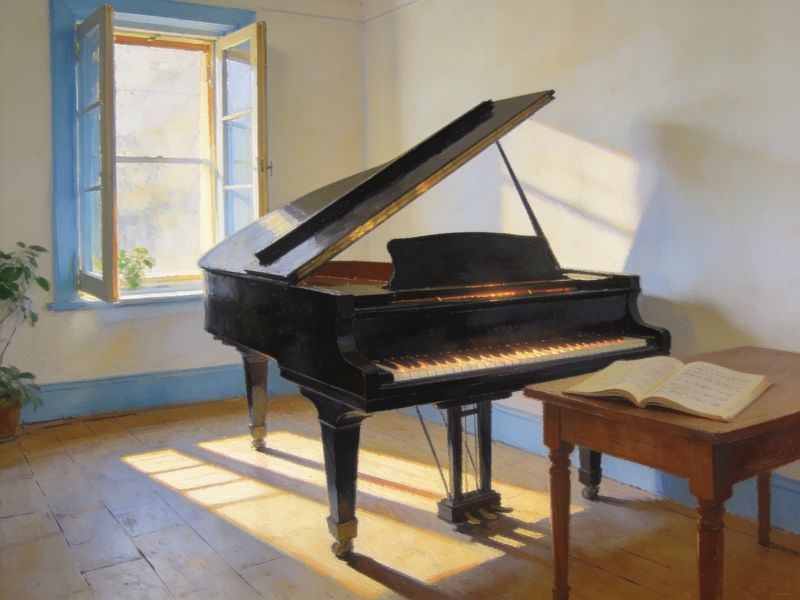
Live, Dulko is a different animal. I saw him play in a small gallery in Berlin last autumn—maybe forty people, folding chairs, a single overhead lamp. He barely moved. No theatrical swaying, no between-song banter. Just a focused, almost workmanlike engagement with the keyboard. The audience didn't clap after the first piece;we weren't sure it was over. Then Dulko nodded once。and the spell broke. Someone laughed nervously. That moment—the uncertainty, the collective breath—captures what makes his work matter. In a culture that treats every silence as a problem to be solved, Dulko treats silence as material. He shapes it, respects it, and occasionally lets it win.
If you're looking for music that announces its importance, Dulko will frustrate you. If you're willing to meet the work halfway—to listen without agenda—you'll find something increasingly rare: art that trusts its audience. The new record, due this spring, reportedly strips things back even further. I'm not sure how that's possible. But I'll be there, in the quiet。waiting to find out.