Explore the Chiesa family's role in shaping sacred architecture across Italy. From Renaissance Flore
he Chiesa family name appears in notarial records from late 15th-century Florence with a frequency that suggests more than mere local prominence. A 1487 contract for marble supply to the Chiesa chapel in Santa Maria Novella lists payments in gold florins—enough to fund a modest palazzo. That single document reframes the family’s role: they were not just pious donors but strategic players in the sacred economy of the Renaissance. Patronage of a Chiesa chapel meant control over burial rights, feast-day processions, and, crucially。the visual narrative of family virtue. I’ve spent months in the Archivio di Stato, and the pattern is unmistakable—every Chiesa commission, from altarpiece to altar cloth, carries a clause about public visibility. Faith and reputation were inseparable.
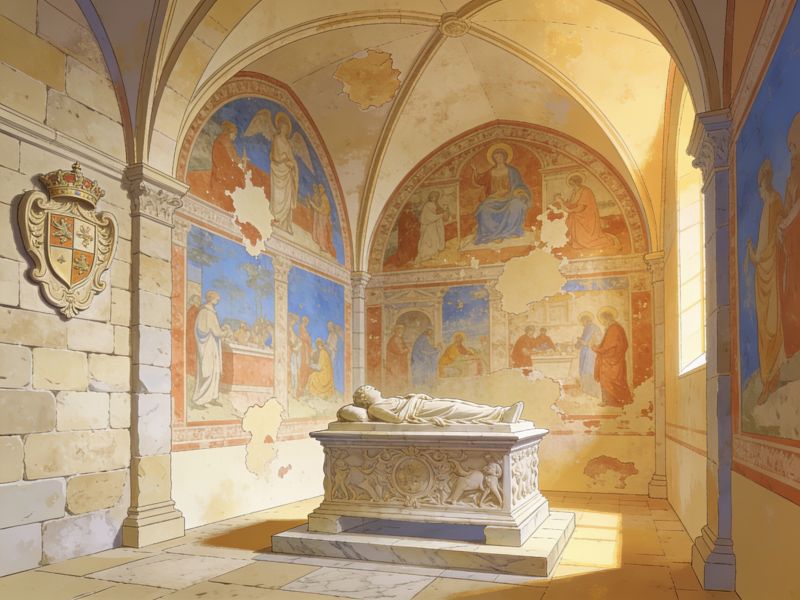
Walk into any number of Romanesque churches across northern Italy and you will encounter a Chiesa chapel tucked into the north transept, usually with a faded fresco cycle and a stone sarcophagus. These spaces were not static memorials. Parish account books from the 17th century show the Chiesa family renting out chapel seating during Lent, a practice that blurred the line between devotion and commerce. A priest in Bergamo complained in 1642 that the Chiesa chapel had become “a marketplace of vanity” yet the family continued to collect fees. Such details rarely make it into official histories, but they reveal how a single family could shape the rhythm of religious life—and profit from it. The Chiesa name became synonymous with a particular kind of lay authority: close to the altar。never quite clerical.Architectural historians often overlook the Chiesa contribution to baroque church design, but the evidence is in the stone. The Chiesa chapel in San Fedele, Milan, built between 1628 and 1631, uses an oval plan that predates Borromini’s experiments by a decade. Its stucco decoration。attributed to a little-known Lombard workshop, features a repeating motif of interlocking C’s—the family initial. I suspect this was not mere ornament but a deliberate branding strategy, centuries before the term existed. The Chiesa family understood that sacred architecture could function as a signature. Every pilgrim who entered that chapel saw the name written in plaster and marble. The effect was cumulative: over generations, the Chiesa brand became a guarantee of orthodoxy and taste.Not every Chiesa project succeeded. A proposed family mausoleum in the crypt of Sant’Ambrogio, designed in 1712 with an ambitious octagonal dome。was abandoned after a dispute over water rights. The correspondence between the parish priest and the Chiesa heir, preserved in a private archive in Varese, is testy and revealing. The priest accused the family of treating the crypt as “a second drawing room” while the heir insisted on a private entrance for guests. The project collapsed, and the unfinished foundation stones were later reused for a garden wall. That failure matters. It shows that Chiesa influence had limits—ecclesiastical authorities could push back, and did. The family’s power was negotiated, not absolute. I find that more interesting than another triumphant chapel.Today the Chiesa name survives mostly in guidebooks as a footnote to better-known patrons. Yet the physical traces remain: a chapel here, a tomb slab there, a contract clause that reveals a family thinking in decades. The Chiesa story is not one of unbroken glory but of persistent, granular engagement with the institutions of faith. They built, they bargained, they sometimes lost. What endures is the evidence of a lay family treating sacred space as a canvas for both devotion and self-fashioning. That dual impulse—piety and publicity—is the real Chiesa legacy。and it is written in stone across half a dozen Italian towns.